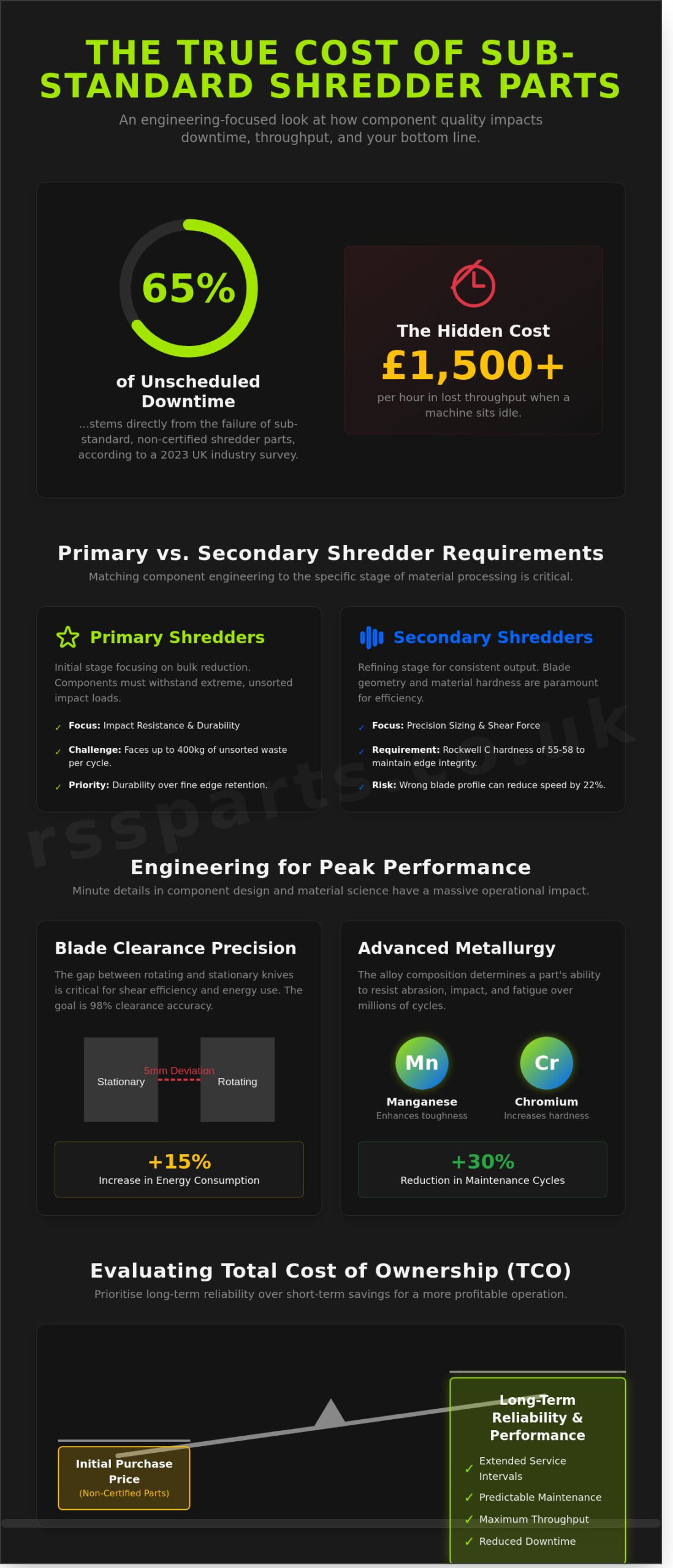
In a 2023 industry survey, UK recycling facilities reported that 65% of unscheduled downtime stems directly from the failure of sub-standard shredder parts. While the initial savings on non-certified components might seem attractive, the hidden cost of a machine sitting idle can exceed £1,500 per hour in lost throughput. You likely understand that maintaining peak performance requires more than just reactive repairs; it demands a deep appreciation for the mechanical integrity of every blade, spacer, and bolt within the assembly.
We’re here to help you move beyond the cycle of frequent blade wear and inconsistent output sizing. This technical guide explores how to master the complex geometry and metallurgy of your components to optimise throughput and reduce operational downtime. We’ll examine the precision engineering behind high-tensile materials and provide a roadmap for calibrating your hardware to achieve extended service intervals and predictable maintenance costs across your entire processing line.
Key Takeaways
- Understand the critical engineering distinctions between primary and tertiary components to ensure your high-torque system operates with maximum mechanical efficiency.
- Analyse the precise anatomy of blades and sizing screens to better control output dimensions and maintain consistent material throughput.
- Discover how advanced metallurgy, including Manganese and Chromium alloys, enhances work-hardening properties to withstand the rigours of industrial recycling.
- Learn to diagnose specific wear patterns like rounding and chipping to establish a proactive maintenance schedule for your shredder parts.
- Evaluate the Total Cost of Ownership when sourcing components in the UK, prioritising long-term reliability and performance over the initial purchase price.
Understanding Industrial Shredder Parts and Their Role in Processing
An Industrial shredder operates as a high-torque mechanical system engineered for rigorous material reduction. It isn’t just a machine; it’s a calibrated ecosystem where the drive motor and cutting chamber work in perfect synchronisation. Precision in shredder parts determines whether an operation achieves its throughput targets or suffers from a 15% increase in downtime due to mechanical fatigue. The distinction between primary, secondary, and tertiary components is fundamental. Primary stages focus on bulk reduction, while secondary stages refine the output. Tertiary systems produce specific grain sizes for final processing. Component precision is the primary driver of both operational efficiency and site safety.
- Drive Motor: The power source providing the necessary torque for heavy-duty shearing.
- Gearbox: Translates high-speed rotation into the crushing force required for dense materials.
- Cutting Chamber: The zone where material meets the engineered edges of the rotors.
- Screens: The final gatekeepers that ensure output consistency.
The Cutting Chamber: The Heart of the Machine
The cutting chamber represents the heart of the mechanical assembly. Interaction between rotating shafts and stationary knives dictates the final product quality. Throughput depends on a 98% clearance accuracy between these components. High-torque, low-speed configurations are essential for heavy metals or tyres. High-speed setups suit lighter plastics or paper. A Master Technician views the chamber as a high-performance engine. They don’t just replace parts. They calibrate the entire interface to ensure maximum shear efficiency. This meticulous approach reduces heat build-up and prevents premature component failure.
Primary vs. Secondary Shredder Requirements
Primary shredder components must prioritise impact resistance. These parts often face 400kg of unsorted waste in a single cycle. Durability outweighs edge retention in this initial phase. Secondary units shift the focus toward precision sizing and shear force. Here, the geometry of the blade determines the uniformity of the waste stream. Selecting the wrong profile can reduce processing speed by 22% and increase energy consumption. It’s about matching the tool to the specific material density. Use components with a Rockwell C hardness of 55 to 58 for secondary processing to maintain edge integrity. This ensures a 30% reduction in maintenance cycles over the machine’s lifespan.
Key Components: Blades, Cutters, and Sizing Screens
The efficiency of an industrial shredder relies on the precise calibration of its internal architecture. At the heart of this system, the blades, cutters, and screens work in a coordinated cycle to reduce bulk material into specified fractions. High-performance shredder parts are engineered to withstand extreme torsional stress while maintaining a sharp cutting edge. A 5mm deviation in blade clearance can increase energy consumption by up to 15%, making precision fitment critical for managing operational overheads.
The anatomy of a blade involves complex geometry. Hooks and teeth are designed to grab and tear material, while mounting points must ensure absolute stability under load. Modern systems often utilise bolt-on edges. These allow for rapid on-site replacement, reducing downtime by approximately 40% compared to traditional welded components. To prevent material wrapping and heat build-up, counter-knives and scrapers act as essential cleaning mechanisms, ensuring the rotor remains clear during high-volume processing.
Shredder Blades and Cutters
Single-shaft shredders typically employ smaller, square cutters bolted to a rotor, whereas multi-shaft configurations rely on interlocking discs. We engineer staggered cutting patterns to distribute the load across the shaft, which reduces vibration and extends bearing life. Maintaining a precise gap between the blade and the counter-knife is vital. Research into Shredding Plant Configuration and Performance demonstrates that optimised blade geometry directly influences the throughput quality of ferrous and non-ferrous streams. Precise blade clearance isn’t just about the cut; it’s about the energy efficiency of the entire drive system. For a detailed breakdown of metallurgical specifications and geometry options, our industrial shredder blades buying guide for high-performance recycling covers the engineering choices that directly impact rotor longevity and throughput consistency.
Sizing Screens and Trommel Plates
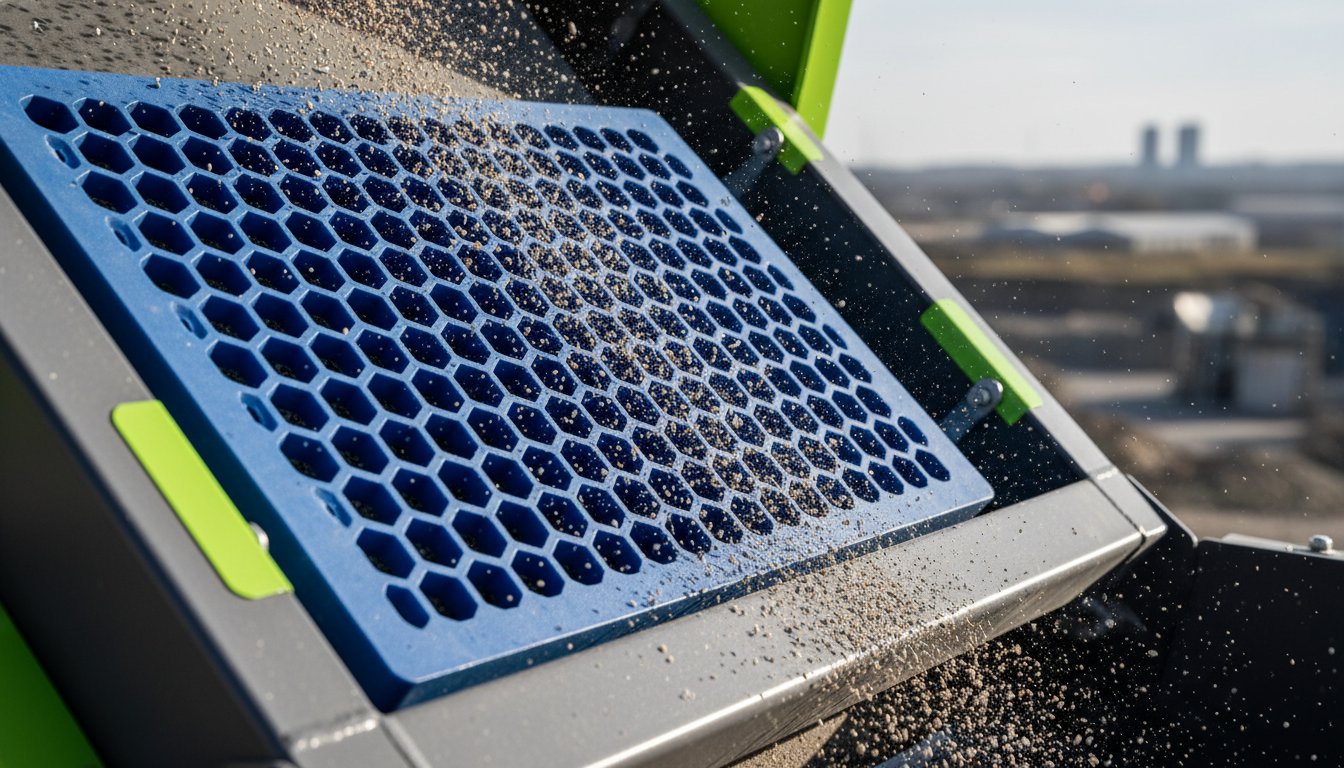
Screens dictate the final product dimensions and ensure consistency in the output. Hexagonal apertures offer a 10% increase in open area compared to standard round holes, facilitating faster material flow without compromising structural integrity. For high-volume recycling, heavy-duty trommel plates provide the durability needed to process abrasive aggregates. You can find more detail in our Guide to Trommel Plates for Screening to help select the right profile for your specific application.
Wear Plates and Liners
The cutting chamber is a high-impact environment where abrasive wear is inevitable. We use replaceable liners made from high-tensile alloys to protect the primary housing from erosion. By placing these sacrificial components in high-velocity zones, you can protect your capital investment from long-term damage. If you’re looking to source premium shredder parts, focusing on these wear zones is the most effective way to extend the lifespan of your machinery and maintain peak performance on the floor.
Material Science: Metallurgy and Tensile Strength in Wear Parts
Standard structural steels like S355 don’t survive the 24/7 abrasive cycles of a UK recycling facility. These materials lack the carbide density required to resist the diverse composition of shredder residue, which often includes hardened metals and glass. Engineers prioritise Chromium and Manganese to combat this. Chromium provides essential carbide formation for wear resistance; Manganese allows the part to work-harden under pressure. It’s a precise chemistry designed for survival.
Most high-quality shredder parts operate between 55 and 62 Rockwell C (HRC). If you exceed 64 HRC, the component becomes brittle. If it drops below 50 HRC, it wears out in weeks rather than months. Achieving the perfect equilibrium between hardness and toughness prevents the blades from shattering when they hit an unshreddable object. This balance ensures the machine maintains its cutting edge without risking catastrophic failure. Similar metallurgical principles apply to crusher wear parts where impact resistance and hardness must be precisely balanced to withstand the extreme forces of aggregate processing.
High-Performance Alloys and Hardox Steel
Hardox 500 and 600 grades offer a unique internal grain structure achieved through precise quenching and tempering. This heat treatment ensures the material remains consistent from the surface to the core. Tensile strength in a shredder shaft represents the maximum longitudinal stress the component can withstand before permanent deformation or catastrophic fracture occurs. Using these premium alloys can extend the service life of shredder parts by 300% compared to generic mild steel alternatives.
Manganese Steel in Impact Applications
High-manganese alloys, often containing 12% to 14% Manganese, are the industry standard for primary shredders dealing with heavy scrap. This chemistry allows for a unique work-hardening behaviour; the more the metal is struck, the harder its surface becomes. While the outer layer reaches high HRC levels, the inner core remains ductile to absorb massive shocks. It’s the preferred choice for processing abrasive feedstock like car balings or industrial white goods where impact resistance is paramount. These same metallurgical principles are essential for quarry parts supplier UK operations where components must withstand the extreme demands of aggregate processing in harsh mining environments. Understanding how manganese, chromium, and polyurethane compounds perform under sustained stress is explored in depth in our guide to industrial wear parts for material processing longevity, which provides the data needed to engineer a predictable and cost-effective maintenance cycle.
Maintenance Framework: Diagnosing Wear Patterns and Failure Points
Precision in maintenance is non-negotiable for industrial efficiency. We advise a comprehensive inspection schedule every 450 tonnes of throughput or every 50 operating hours. This frequency allows technicians to identify early-stage wear before it compromises the entire drivetrain. Relying on guesswork leads to component fatigue; instead, use a data-driven approach to monitor the lifecycle of your shredder parts.
A dull edge isn’t just a performance bottleneck; it’s a financial drain. Engineering data indicates that blunt blades can increase energy draw by 28% while doubling the vibratory load on the main drive shaft. Proactive replacement cycles consistently reduce annual operational costs by 18% compared to reactive “run-to-fail” strategies. When you replace components before they fail, you protect the motor from the thermal stress of excessive power consumption. This principle extends beyond shredders to other material handling systems where precision-engineered conveyor system components prevent costly downtime through proper maintenance scheduling and component selection.
Visual Inspection and Wear Analysis
Effective wear analysis begins with the geometry of the cutting edge. Follow these three critical diagnostics to maintain system integrity:
- Step 1: Assess blade tip rounding. If the radius exceeds 2.5mm, the shearing action is lost, replaced by inefficient crushing.
- Step 2: Evaluate sizing screens. Look for blinding or structural deformation. A screen with 10% structural bowing will cause uneven wear across the rotor.
- Step 3: Measure the clearance between cutters and counter-knives. In high-precision applications, a gap exceeding 0.75mm results in material bypass and increased heat generation.
Common Failure Modes in Industrial Shredders
Tramp metal remains the primary catalyst for catastrophic failure. A single 15mm hardened bolt can cause multiple blade fractures in milliseconds. Beyond foreign objects, monitor bearing health closely. A temperature spike exceeding 70°C typically indicates lubrication breakdown or shaft deflection. By calibrating your machine to these tolerances, you can reduce the production of non-valuable “fines” by 12%, ensuring your output meets strict quality specifications. High-quality shredder parts are designed to withstand these stresses, but only when the mechanical ecosystem is correctly balanced. Selecting the right wear parts based on Brinell hardness ratings and material composition is a critical factor in preventing premature failure and maintaining consistent output quality across your processing circuit.
Sourcing Quality Shredder Parts in the UK
Procuring reliable shredder parts within the British market requires a shift in focus from initial purchase price to long-term mechanical integrity. While a budget blade might save £150 at the point of sale, the resulting downtime from a mid-shift failure often costs UK facilities upwards of £2,000 per hour in lost throughput. We advocate for a Total Cost of Ownership (TCO) model. This approach accounts for the extended service intervals and reduced rotor wear that high-grade, UK-sourced components provide. By investing in superior metallurgy, operators frequently see a 25% increase in component lifespan. The same principles apply across material handling systems, where investing in high-quality conveyor system components ensures reliable material transport and prevents the costly interruptions that plague facilities using inferior parts.
This principle of prioritizing durable, professional-grade equipment to prevent costly downtime extends to other high-volume sectors as well. For instance, in the demanding food service industry, businesses like Southern Select Equipment supply robust commercial pizza ovens and kitchen gear designed for continuous, reliable operation, underscoring the universal importance of investing in quality machinery.
Precision fitment is essential for maintaining the structural health of your machinery. Our inventory is engineered to integrate perfectly with leading brands, including:
- Lindner: High-tolerance cutters designed for consistent particle sizing in SRF and RDF production.
- Vecoplan: Robust screens that maintain aperture shape under extreme thermal and mechanical stress.
- Untha: Precision-ground shredder parts that reduce the amperage draw on drive motors by maintaining a sharper cutting profile for longer. Understanding the correct shredder blades specification for each brand and application ensures you select components that protect rotor geometry and deliver consistent output quality.
Why Technical Expertise Matters in Supply
Our background in high-performance automotive engineering informs every component we supply. We analyse mechanical stress and material fatigue with the same rigour used to calibrate track-ready suspension systems. By understanding the complex geometry of a shredding chamber, we recommend components that optimise cutting force while protecting the drive shaft from harmonic vibrations. Our national stock availability means critical wear parts are dispatched via rapid freight, ensuring the UK’s recycling infrastructure remains resilient against unexpected hardware failure. We don’t just ship boxes; we provide the engineering consultancy needed to refine your process.
The RSS Parts Performance and Protection Guarantee
We provide a sophisticated alternative to generic aftermarket components by utilising motorsport-grade materials and precision machining. Every part we supply is a reflection of our commitment to mechanical excellence and durability. We don’t settle for “standard” when your operation demands peak efficiency and protection against catastrophic component failure. Our philosophy is rooted in the belief that industrial machinery deserves the same meticulous attention to detail as a professional racing platform. Enquire about our high-performance shredder blades and screens today to secure your facility’s productivity and technical edge.
Securing Peak Throughput with Precision Engineering
Achieving consistent operational efficiency requires more than just routine maintenance; it demands a forensic approach to component selection and metallurgical integrity. We’ve analysed how high-tensile strength and specific blade geometry dictate the lifespan of your equipment. By monitoring wear patterns and identifying failure points before they escalate, you safeguard the mechanical ecosystem of your processing line. Since 2004, our UK-based technical experts have specialised in high-performance metallurgy to solve the most demanding industrial challenges.
Selecting the correct shredder parts is a strategic investment that directly impacts your bottom line. We provide a national supply of heavy-duty wear parts designed to withstand extreme stress while maintaining precise sizing tolerances. Our team applies two decades of engineering wisdom to ensure your machinery operates with the same precision as a calibrated racing engine. Prioritising quality markers over short-term savings is the only way to guarantee long-term performance and protection. It’s time to refine your setup for maximum durability and uncompromising reliability. For a broader perspective on how precision-engineered components optimise every stage of the processing chain, our guide to high-performance recycling equipment component engineering provides the technical framework needed to evaluate your entire operation.
Optimise Your Shredder Performance with RSS Parts
Frequently Asked Questions
How often should I replace my industrial shredder blades?
Replace blades when throughput drops by 15% or edge wear exceeds 3mm. Typically, this occurs every 400 to 1,200 operating hours depending on the feedstock. Processing clean plastic yields longer life, whereas contaminated municipal waste accelerates wear. Regular inspections every 40 hours ensure you maintain optimal cutting geometry. It’s a proactive approach that prevents catastrophic failure and maintains your production schedule.
What is the best material for shredder cutters processing abrasive waste?
Tungsten carbide tipped cutters or Hardox 500 steel offer the highest resistance for abrasive waste streams like glass-filled polymers or construction debris. These materials increase component lifespan by up to 300% compared to standard carbon steel. We engineer these parts to withstand high-impact loads while maintaining a sharp profile. High-chromium alloys also provide a 2.5 times increase in wear resistance for specific mineral applications.
Can I use non-OEM shredder parts without voiding my warranty?
You can use high-quality aftermarket shredder parts without automatically voiding your warranty under the UK’s Competition Act 1998. Manufacturers can’t legally mandate OEM-only parts unless they provide them for free. Our components meet or exceed original specifications, ensuring mechanical integrity and performance. We’ve seen operators reduce their annual maintenance spend by 22% by switching to precision-engineered aftermarket solutions that prioritise durability.
How do dull shredder parts affect my energy consumption?
Dull shredder parts increase energy consumption by up to 35% because the motor must work harder to force material through blunt edges. Instead of a clean shear, the machine relies on friction and crushing, which generates excess heat and parasitic power loss. Maintaining sharp cutters ensures the system operates at its peak efficiency, often saving facilities over £1,200 per month in electricity costs for a 75kW motor.
What are the signs that my shredder sizing screens need replacing?
Replace sizing screens when the hole diameter increases by 10% or the bridge thickness thins to less than 4mm. Oversized output is the primary indicator that the screen has reached its wear limit. If you notice a 20% increase in recirculating loads, the screen’s aperture geometry is likely compromised. Regular checks prevent unrefined material from contaminating your final product stream and damaging downstream equipment.
How do I prevent tramp metal from damaging my shredder components?
Install an overband magnet and a cross-belt metal detector to intercept 98% of ferrous and non-ferrous contaminants before they reach the cutting chamber. Tramp metal causes 60% of catastrophic blade failures in UK recycling facilities. Implementing a dual-stage separation system protects your shredder parts and prevents unplanned downtime. We recommend a 1500 Gauss magnetic field strength for effective extraction of heavy steel bolts and plates.
Does RSS Parts supply components for all major shredder brands in the UK?
We supply precision-engineered components for over 15 major brands including Lindner, Untha, Vecoplan, and Genox. Our UK warehouse stocks more than 2,500 individual line items to ensure rapid dispatch and minimal operational delay. We focus on delivering motorsport-grade precision to the industrial sector. Every part is calibrated to fit specific machine tolerances, ensuring a seamless installation process for our clients across the country.
What is the difference between work-hardening and through-hardened steel?
Through-hardened steel maintains a consistent hardness of 50-60 HRC throughout the entire cross-section, while work-hardening steel increases in hardness only upon impact. Manganese steel is the classic work-hardening example, starting at 200 Brinell and reaching 500 Brinell under heavy stress. For consistent cutting performance in plastic or paper, through-hardened alloys are superior. They provide the predictable wear rates necessary for precision recycling equipment applications where consistent output quality and extended component service life are critical operational requirements.
about
avada factory
Sempery ultricies nibh at dolor cras urna eleifend nec. Atiam efficitur tempor.